

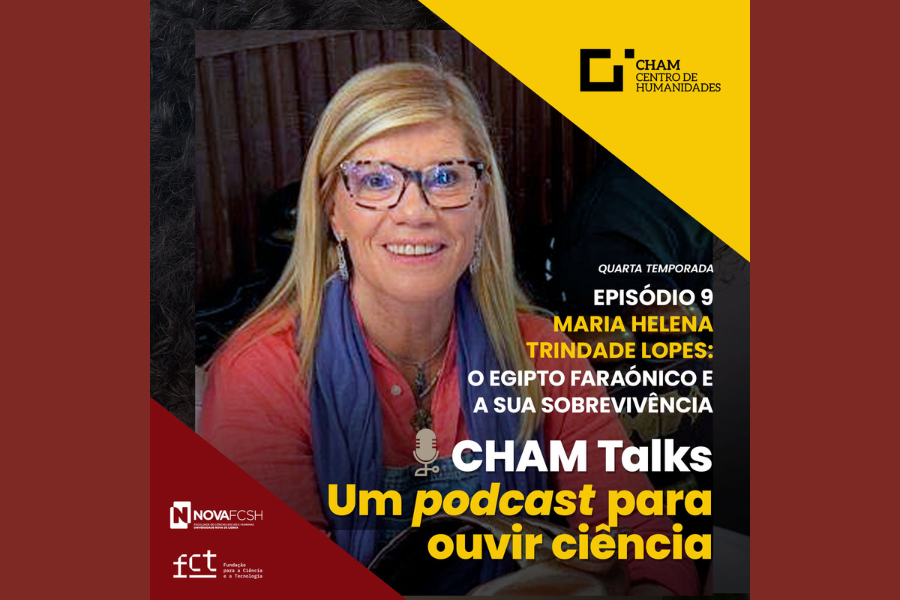
Pharaonic Egypt and its survival, with Maria Helena Trindade Lopes
Pharaonic Egypt lasted for around three thousand years. Maria Helena Trindade Lopes explains the geographical and conceptual reasons for this impressive longevity: the country's natural borders and the way in which the populations adopted a more linear conception of time (linked to the Nile) and a more cyclical one (linked to the sun). ‘They will transform what is truly revolutionary in this civilisation, the concept of eternity,’ she emphasises. In this episode, the professor and researcher also talks about the preservation of Egyptian cultural identity over the centuries and the reception of the Egyptian imagination today, from the visual arts to cinema. The interview is conducted by Beatriz Freitas.
Maria Helena Trindade Lopes is a senior researcher at CHAM and Professor of History at NOVA FCSH. She was director of the first Portuguese archaeology project in Egypt and was awarded the Grand Officer of Public Instruction Medal in 2003. She is a member of the European Science Foundation's review panel and an evaluator on several research funding competition panels. Her areas of research are mainly related to the history and archaeology of ancient Egypt, the Mediterranean world and the reception of Antiquity.
In the next episode, Nuno Miguel Proença discusses identities and narratives.
The theme tune for ‘CHAM Talks, a podcast for listening to science’ uses ‘Bike Sharing To Paradise’ by Dan Bordan (copyright-free).
Coordination
Isabel Araújo Branco (CHAM)
Organization
CHAM / NOVA FCSH


