

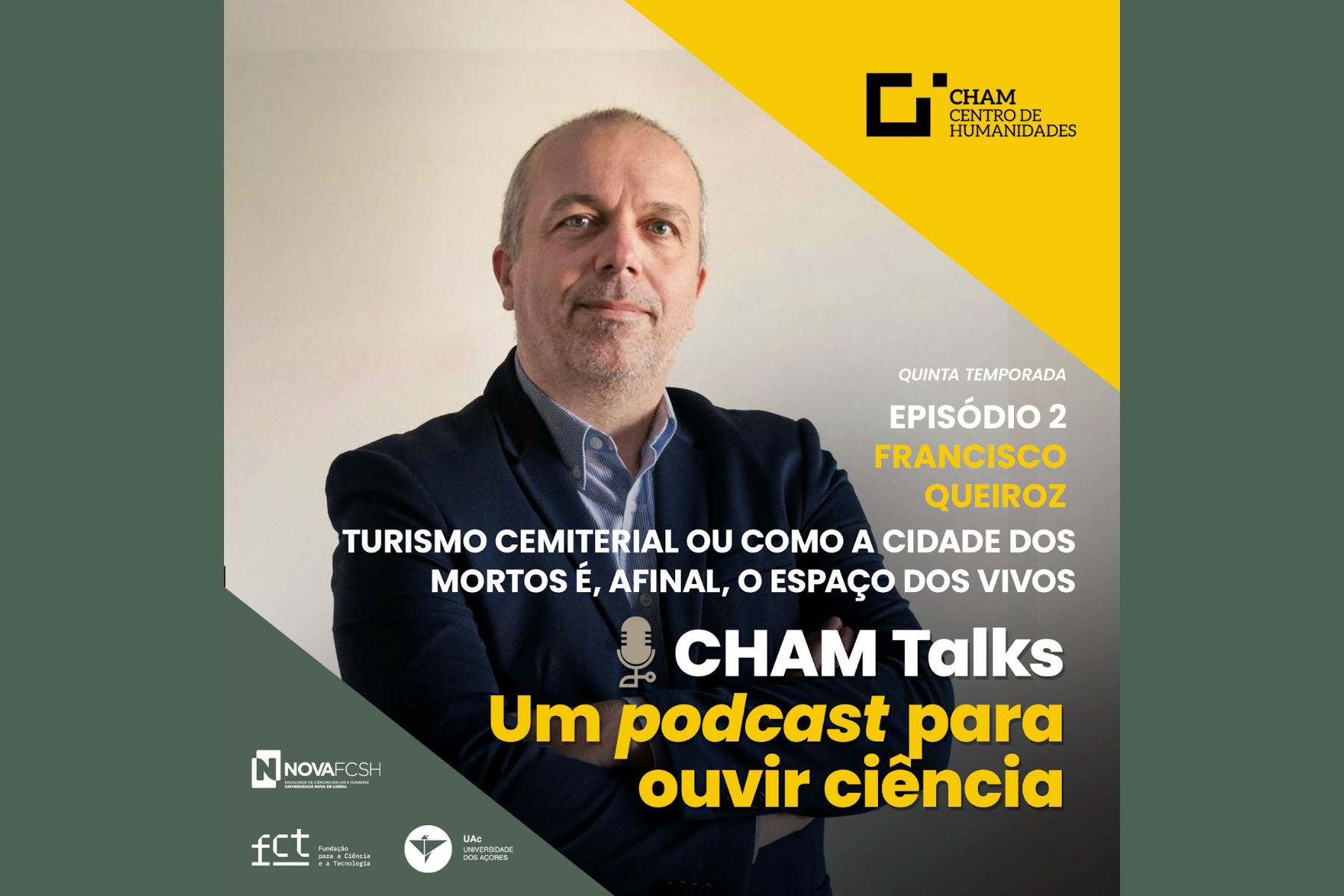
Cemetery tourism, or how the city of the dead is, after all, the realm of the living, with Francisco Queiroz
‘Cemeteries were designed to be visited and, particularly during the Romantic era, were the focus of significant artistic investment. Some people spend the equivalent of a house on a grave. In some cases, these graves are innovative, featuring architectural or sculptural designs that are later replicated in the city of the living,’ explains art historian Francisco Queiroz. In this interview, we explore what cemetery tourism entails and the best practices of guides in this field, its origins in the 19th century, its cultural significance, the impact of the individualisation of graves, the relationship between these spaces and the history of cities, and the differences between public and private cemeteries. The interview is conducted by Joana Rodrigues.
Francisco Queiroz holds a PhD in Art History from the University of Porto and specialises in Romantic funerary art. He has devoted himself to the study and promotion of historical and artistic heritage, particularly architecture, urban planning and the decorative arts. He is an expert in handwriting analysis, a contributor to the Tile Research Network (ARTIS – IHA/FLUL) and editor of the journal RomantHis. He has been conducting research since 1995 and has published over a hundred works, including several books, some on family history. He is co-author of the handbook Descubra as suas origens.
In the next episode, Cristina Somolinos Molina discusses working women in contemporary Spanish literature.
The theme tune for "CHAM Talks, a podcast for listening to science" uses "Bike Sharing To Paradise" by Dan Bordan (copyright-free).
COORDINATION
Isabel Araújo Branco (CHAM)
Organization
CHAM / NOVA FCSH


